
Mastering S-Blends: How to Teach sp, st, sl, sm, sn, sc, sk, and sw & (tw)the Right Way
- Anju

- Jul 24, 2025
- 3 min read
Updated: Sep 20, 2025
Cracking the Code: Why S-Blends Matter in Early Literacy (And How to Make Them Stick!)
If you've ever taught a child to read, you've likely seen the challenge that blends bring—especially those sneaky S-blends like sp, st, sl, sm, sn, sc, sk, and sw. They're everywhere in the English language, yet for early readers, they can feel like a speed bump on the road to fluency.
As a teacher who follows the Science of Reading, I know that explicit instruction in phonological awareness and phonics is critical. And S-blends? They’re more than just sound combos—they’re a gateway to more confident decoding, spelling, and oral language.
Let’s dive into why S-blends matter—and how to teach them effectively.
What Are S-Blends?
S-blends are combinations of the consonant s with one or more other consonants, such as:
sp – spot, spin, spill
st – stop, star, step
sl – slide, slip, slow
sm – smile, small, smell
sn – snap, snow, sneak
sc – scale, scoop, scare
sk – skate, skill, skip
sw – swim, sweep, swing
In a blend, each sound is still heard. This is different from a digraph (like sh or ch), where two letters make one sound. And because the /s/ sound can sometimes overshadow the second consonant, students need lots of structured, repeated practice to master these blends.
🧩 Why Are S-Blends So Tricky?
For developing readers, S-blends pose a few challenges:
The /s/ sound can be soft and easily dropped.
They appear at the beginning of many high-frequency words, which are critical for fluency.
Without explicit instruction, students may guess or substitute the blend for simpler sounds they already know.
That’s why S-blends need to be taught intentionally and systematically, using strategies that integrate phonemic awareness (hearing the sounds), phonics (mapping sounds to letters), and fluency practice (blending the sounds into real words).
💡 How to Teach S-Blends Effectively
According to the Science of Reading, students benefit from a gradual release of responsibility:
Start with oral practice – Can students hear the blend? Segment it? Repeat it?
Use visual supports – Picture cards, word lists, and anchor charts can help reinforce sound-symbol correspondence.
Provide hands-on practice – Activities that combine blending, writing, and picture matching engage multiple parts of the brain.
Offer repeated exposure – The more students interact with S-blends in different contexts, the more likely they are to internalize them.
Differentiate instruction – Some students may need extra support with certain blends, especially those involving tricky articulation (like sw or sl).
Your All-in-One S-Blend Resource
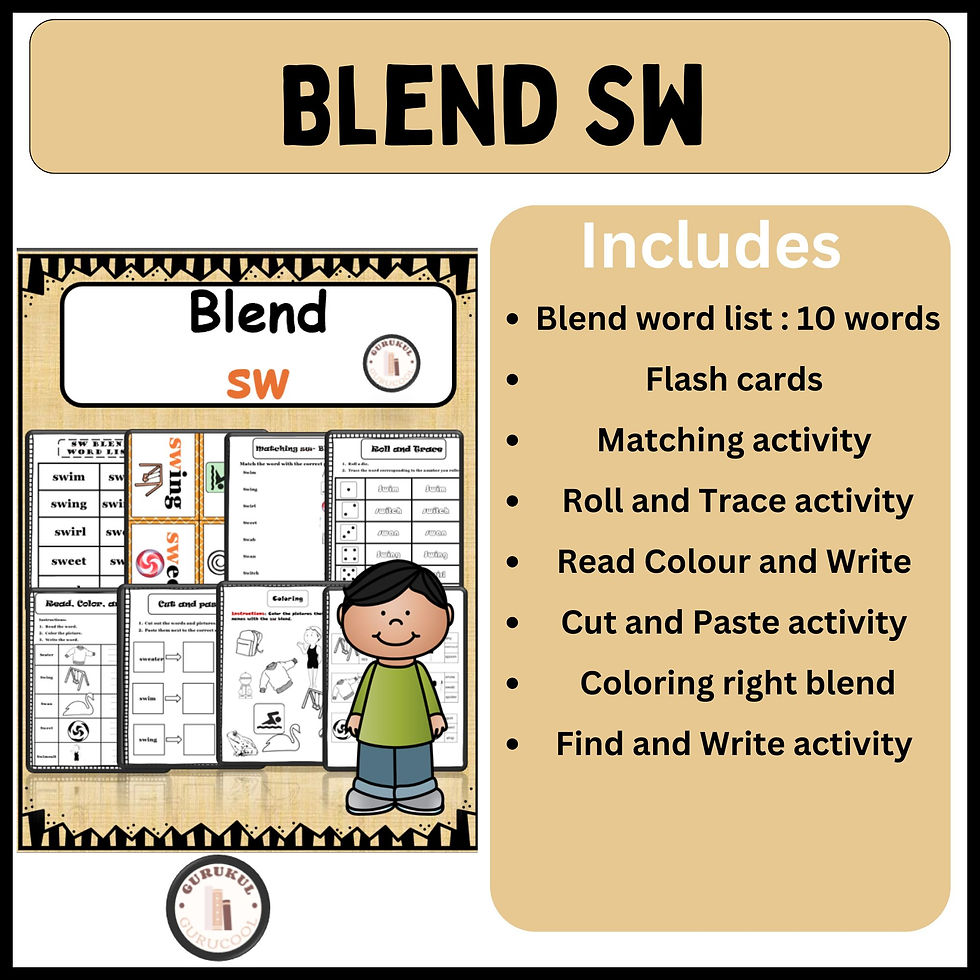
To make your S-blend instruction easier and more engaging, I’ve created a comprehensive resource designed to reinforce all S-blends—with a spotlight on sw as one of the trickier ones.
What’s Inside the S-Blend Resource Pack?
Each activity is thoughtfully designed to align with the Science of Reading while keeping students engaged, focused, and having fun!
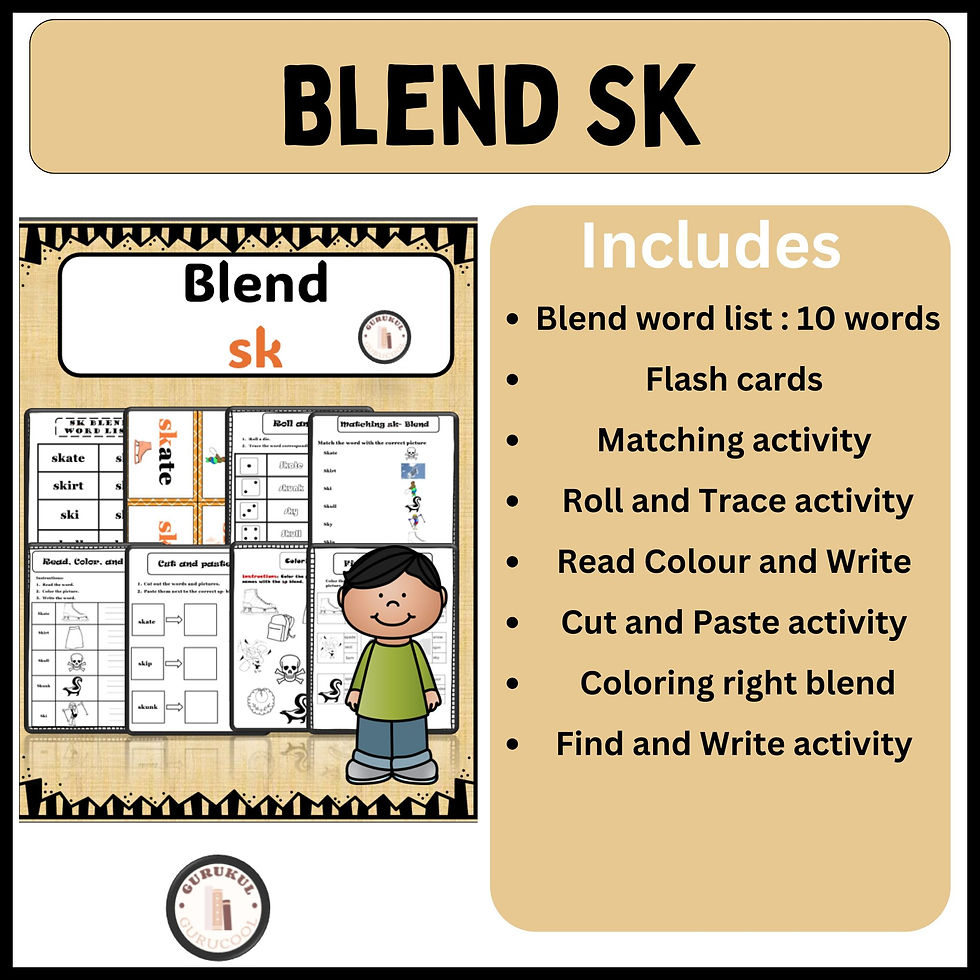
🔤 Word Lists Carefully curated for each S-blend (sp, st, sl, sm, sn, sc, sk, sw), these lists help students expand their vocabulary and strengthen their ability to decode and spell blend-based words.
🖼️ Flash Cards with Pictures Visual aids that pair S-blend words with clear, child-friendly images—perfect for word recognition, oral language development, and whole-group or center activities.
🧠 Picture Matching Worksheets Students match S-blend words to corresponding pictures, reinforcing word meaning, visual recognition, and reading comprehension in a hands-on way.
✍️ Roll and Trace Activities A fun and tactile approach to practicing S-blend words! These activities strengthen letter formation, fine motor skills, and encoding.
🎨 Read, Color, and Write Engaging worksheets that ask students to read a sentence, color a matching image, and write their own sentence using S-blend words—encouraging comprehension and creativity.
✂️ Cut and Paste Practice Interactive activities where students cut out pictures and match them with the correct S-blend word, promoting word recognition and application.
🔍 Find and Write Students search for S-blend words in fun formats (like mini word hunts or short passages) and write them out, reinforcing spelling, scanning skills, and phonics decoding.
🖍️ Color the Correct Picture A playful way to assess understanding—students color only the images that match specific S-blend words, helping them solidify sound-symbol connections.
It’s a great fit for:
Literacy centers
Small-group instruction
Intervention sessions
Homeschool settings
Early finishers and morning tubs
Whether you're introducing blends for the first time or reinforcing them in your small groups, this resource makes learning stick and keeps kids engaged.

And make your blend lessons both structured and fun! And check our individual packs as well :)
Let’s build confident readers—one blend at a time.
Have a favorite activity for teaching S-blends? Drop it in the comments—I’d love to hear from you!
Tap any image to explore the
specific S-blend resource





Love
Anju



Comments