
How I Teach R-Controlled Vowels (and What Finally Worked in My Classroom!)
- Anju

- Sep 6, 2025
- 4 min read
If you’ve ever had a student read car as if it rhymes with cat, you know how tricky R-controlled vowels can be. For a long time, this was one of those sticking points in my classroom. My students would do fine with short and long vowels, but as soon as that bossy r showed up, the wheels seemed to come off.
Over time and with a lot of trial, error, and research I realized that I needed to teach R-controlled vowels differently.
The Science of Reading reminded me that kids don’t just pick these patterns up by exposure; they need explicit, systematic instruction and plenty of practice. Once I started teaching this way, everything clicked.
Why R-Controlled Vowels Are So Important
Patterns like ar, er, ir, or, ur appear constantly in everyday words like her, bird, corn, turn, car. If students can’t decode them, it impacts fluency, comprehension, and even confidence.
The Science of Reading tells us kids learn best when instruction is:
Explicit – no guessing games, we tell them exactly what the vowel+r does.
Systematic – one pattern at a time, with review built in.
Cumulative – always circling back to reinforce what they’ve learned.
When I applied this, I realized my students didn’t just “memorize” words they understood the pattern, and could apply it to new words too.
Cracking the Code of R-Controlled Vowels: How I Teach Them Step by Step
Here’s what it looks like in my classroom, following the Science of Reading:
Direct Teach – I introduce one R-controlled vowel at a time. I’ll say, “When a is followed by r, the sound changes. Watch how my mouth makes the sound in car.”
Model & Practice – We decode together using word lists and flashcards. I don’t skip this kids need to hear, see, and practice until it sticks.
Move to Sentences – Once they’re solid with words, we move into sentences and little reading passages so they can apply their new skill in context.
Spiral Review – I keep circling back to these sounds. Otherwise, they disappear just as fast as we learned them!..
The Activities That Made the Difference
I’ve created and refined a set of resources that my kids actually enjoy and they’ve made teaching R-controlled vowels so much smoother for me.
Here’s what I use and how it works in my room:
Word Lists – Targeted words we practice daily. These keep us focused and avoid overwhelm.

Word list Flash Cards & Pocket Cards – Quick, on-the-go practice. We use them in small groups, centers, and even for “around the world” style games.


Posters – My kids constantly glance up at them during writing time. It’s like having an anchor chart that actually gets used.

Read and Colour & Color It – I love these for Fridays! Kids decode and then color. It feels like a treat but they’re still practicing.
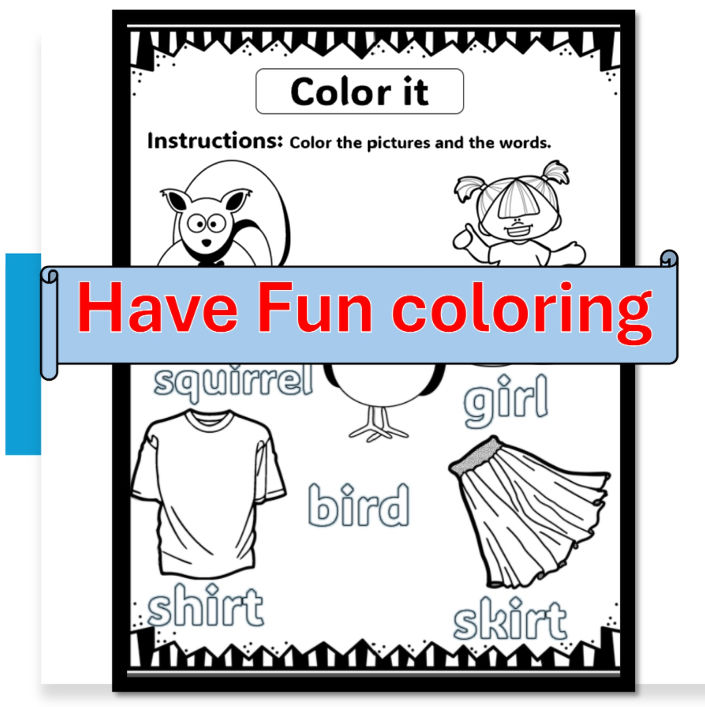
Find It & Word Searches – Instant engagement. They’re basically learning without realizing it.


Decode and Fill in the Blanks – Perfect for moving beyond single words. Kids start applying the sounds in sentences, and fluency takes off.

Read and Write – We use these during independent work to reinforce word reading and spelling.

Scrambled Words & Color and Trace – These hit phonics and finemotor skills at the same time. Win-win.


Phonemic Sentences & Read, Write, Draw – My students love drawing! Connecting phonics to creativity makes the learning stick.

Sentence Comprehension Read, Write, Color – This ties it all together—decoding, comprehension, and a fun activity at the end.

Why It Works
I’ve found that this combination works because it’s:
Systematic – We go pattern by pattern, no guessing or rushing.
Explicit – Kids know exactly what to look for and practice.
Multisensory – They’re not just reading; they’re coloring, tracing, writing, searching.
Engaging – They actually want to do the activities, which means more practice without the groans.
And the best part? I’ve watched kids go from stumbling over words like bird and turn to confidently reading sentences and even writing their own with those tricky patterns.
My Final Thoughts
Teaching R-controlled vowels used to feel like pulling teeth for me. But once I leaned into explicit instruction and found activities that were both structured and fun, everything changed. My students are more confident readers, and I feel less stressed about teaching this tricky skill.
If you’re ready to make R-controlled vowels click for your students too, I’ve bundled all of these resources like word lists, flashcards, posters, games, comprehension activities, and more so you can jump right in and use them in your classroom tomorrow.


Below you’ll find all of my R-Controlled Vowel resources. Each picture represents an individual activity. Simply click (or control + click) on any image to learn more about that resource and see how it can support your students in mastering these tricky vowel pattern!!


Love
Anju



Comments